Fresh mortar joints, and a wall that sheds water again.
Failed mortar ground out to a proper depth and replaced with a matched mix, tooled tight, so brick walls, chimneys and stone stay strong and keep the weather out.
- Depth: Old mortar removed about two to three times the joint width
- Mortar: Matched in strength, color and texture
- Tooling: Concave, struck, flush or raked to match
What it is, and why it matters.
Mortar is the part of a brick wall that is meant to wear out first. After decades of rain, frost and sun it crumbles, shrinks and opens gaps, and water gets in behind the brick. Repointing replaces that failed mortar before the brick itself is damaged.
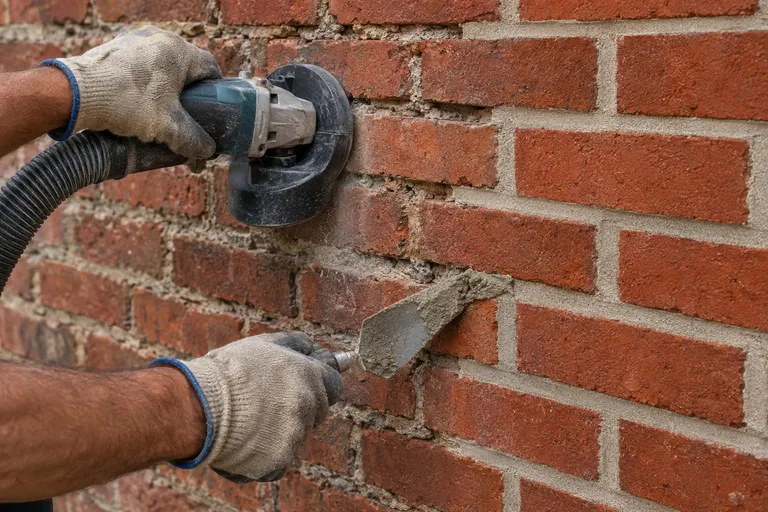
We repoint and tuckpoint brick and stone for homes and buildings in Nashville and across Middle Tennessee. The old mortar is ground or raked out to a safe depth, the joints are cleaned and new mortar, matched in strength, color and texture, is packed in and tooled.
Four things done right.
Cut out deep enough
Mortar is removed to a proper depth, because a thin layer of new mortar on top soon falls out.
A mortar that does not harm the brick
The new mix is no harder than the brick, so the joint, not the brick, wears.
A match you can barely see
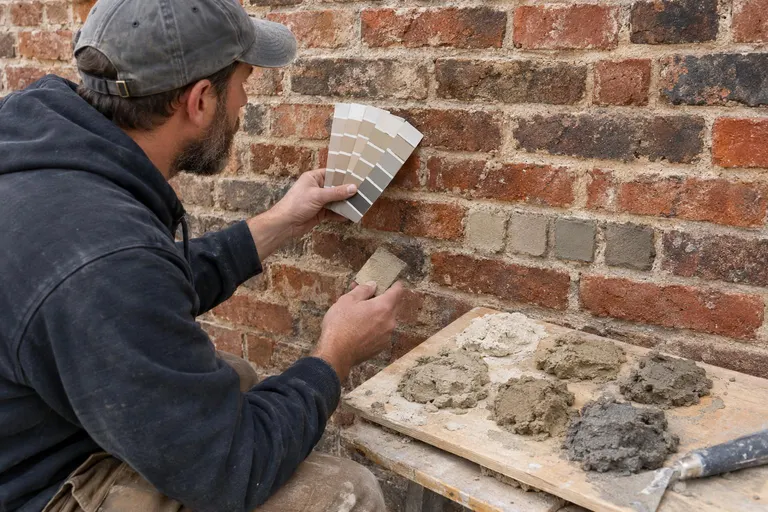
Color and sand are matched against the old mortar, with a test sample.
Tooled tight
Joints are packed in layers and tooled so they shed water.
From first call to tuckpointing and repointing.
- 01
Test and plan
We look at the mortar and the brick, test a small patch and agree on the mix.
- 02
Cut the joints
Old mortar is removed by hand tools or a careful grinder, and the joints are cleaned.
- 03
Pack and tool
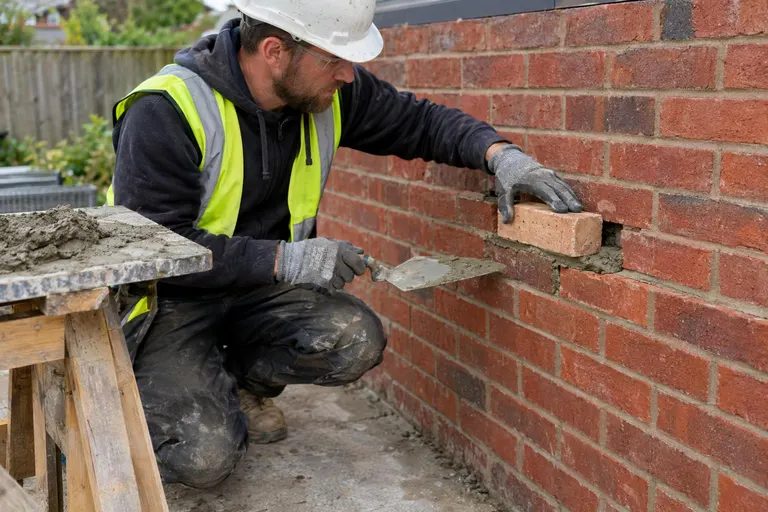
New mortar is packed in layers and tooled to match.
- 04
Clean and cure
The wall is cleaned and misted as the mortar cures.
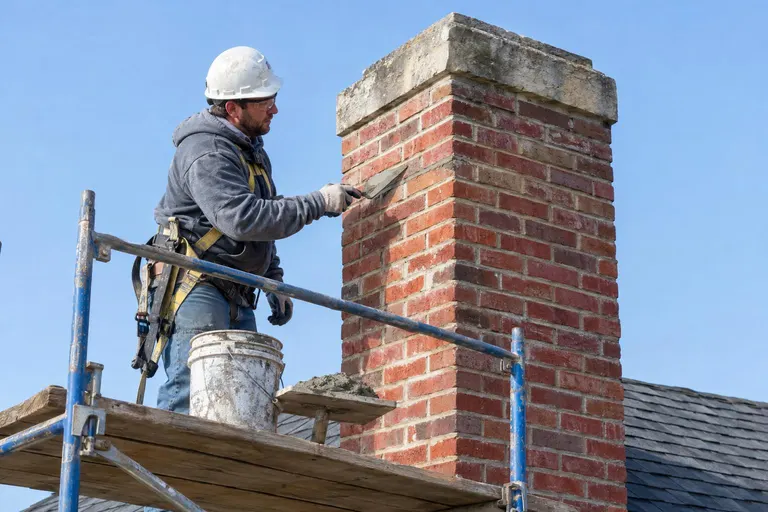
Tuckpointing and Repointing across Middle Tennessee.
We do this work in 28 cities, from Nashville and Franklin to Murfreesboro, Gallatin, Columbia and Dickson.
Tuckpointing and Repointing: common questions
What is the difference between tuckpointing and repointing?
Repointing is the general term for replacing old mortar. Tuckpointing traditionally means filling joints with two colors of mortar and a thin line of putty to imitate fine joints. In everyday use, people use the words for the same service.
How often does brick need repointing?
It depends on the mortar, the exposure and the work, but many walls need it somewhere between 25 and 50 years. Chimneys often need it sooner.
How do I get a price for tuckpointing and repointing?
Fill in the form or call or text 615-431-3789. We confirm what is involved and send a written price, and most projects start with a free visit.
Ready to talk about tuckpointing and repointing?
A visit and a written price. A real person calls back, usually the same day.