The brick dictionary.
Six brick families, defined, and a plain-English glossary of the words masons use: bonds, courses, flashing, weep holes, spalling, efflorescence and more.
Color, texture and character.
From classic red to tumbled antique, each family has a look and a best use.
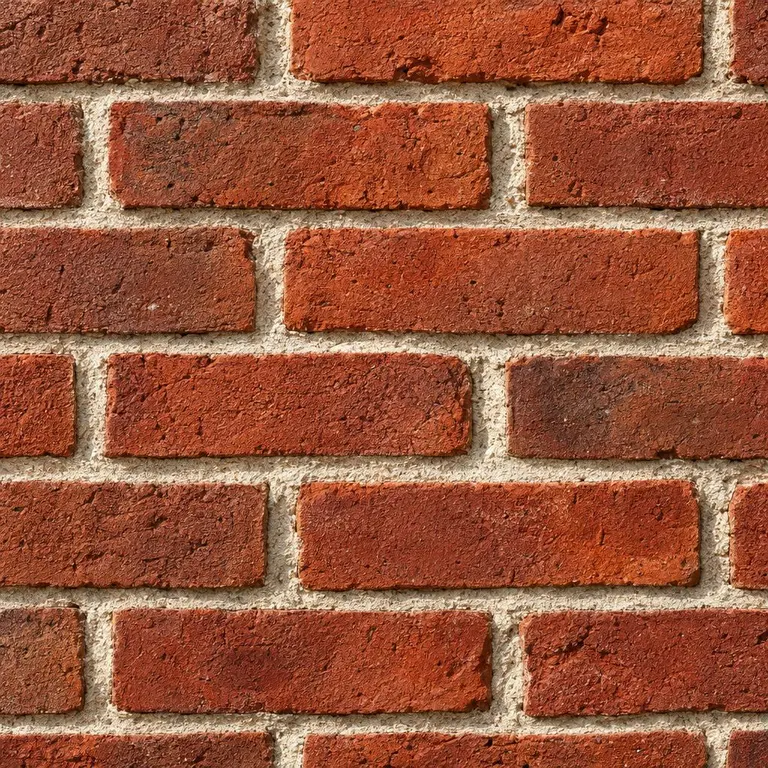
Common red n.
The classic. Iron-rich clay fired until it turns a warm, familiar red. It pairs with nearly any mortar and suits traditional and modern homes alike.
Best for: Homes, chimneys, walls, patios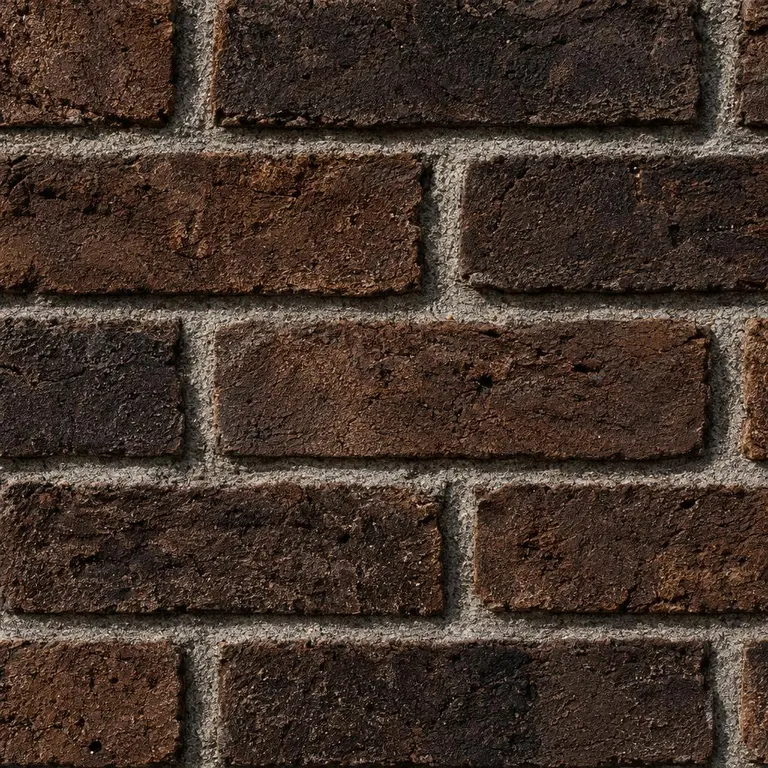
Umber n.
Deeper brown tones from the clay and the firing. Rich and earthy, good at hiding soot and dirt, and a natural partner for stone accents.
Best for: Fireplaces, entries, accent walls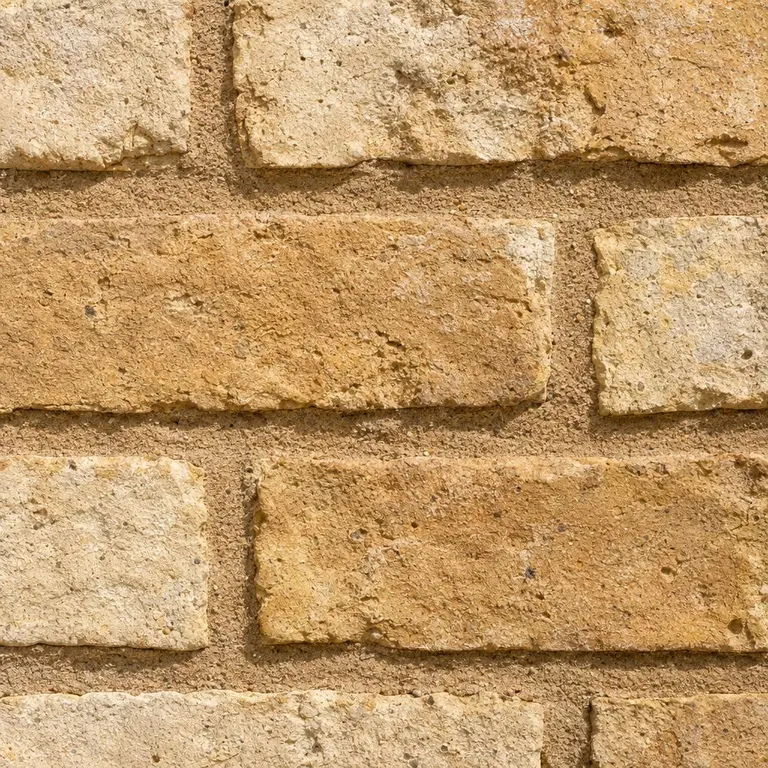
Buff n.
Lighter-burning clay fires to cream and tan. It gives a soft, sunny look and works well with warm mortar.
Best for: Additions, porches, sunny elevations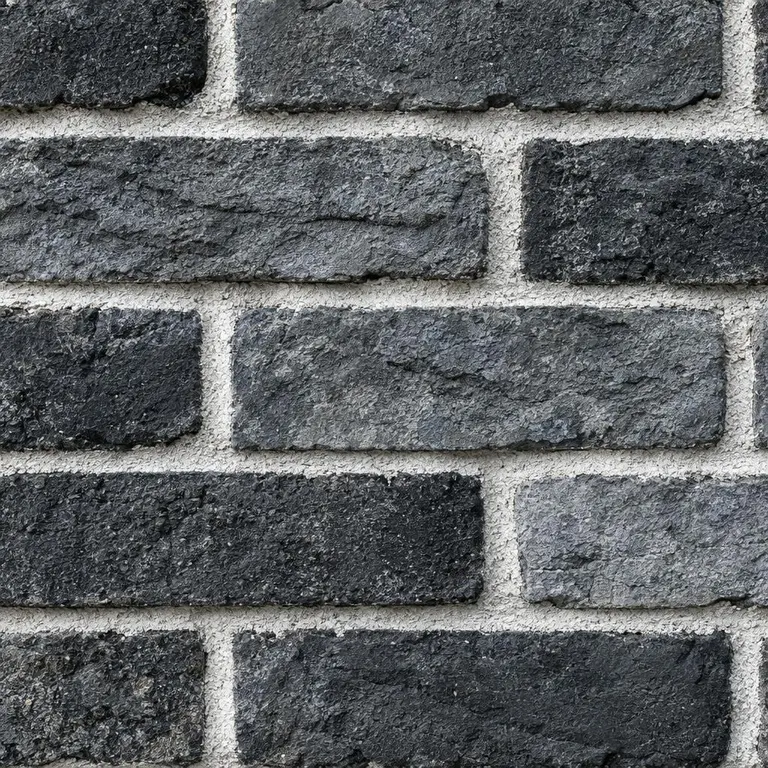
Charcoal n.
A modern, moody gray. Pale mortar draws the pattern out, and dark mortar makes the wall read as one smooth surface.
Best for: Modern homes, feature walls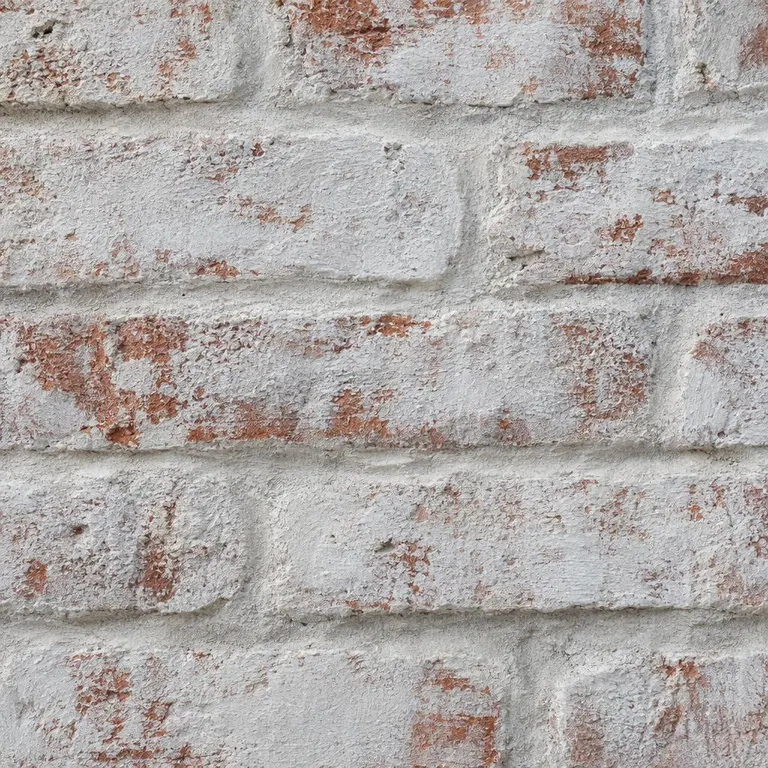
Whitewash n.
A limewashed or mineral-painted finish that brightens a wall and still shows the texture. A breathable coating lets moisture escape.
Best for: Interiors, porches, cottages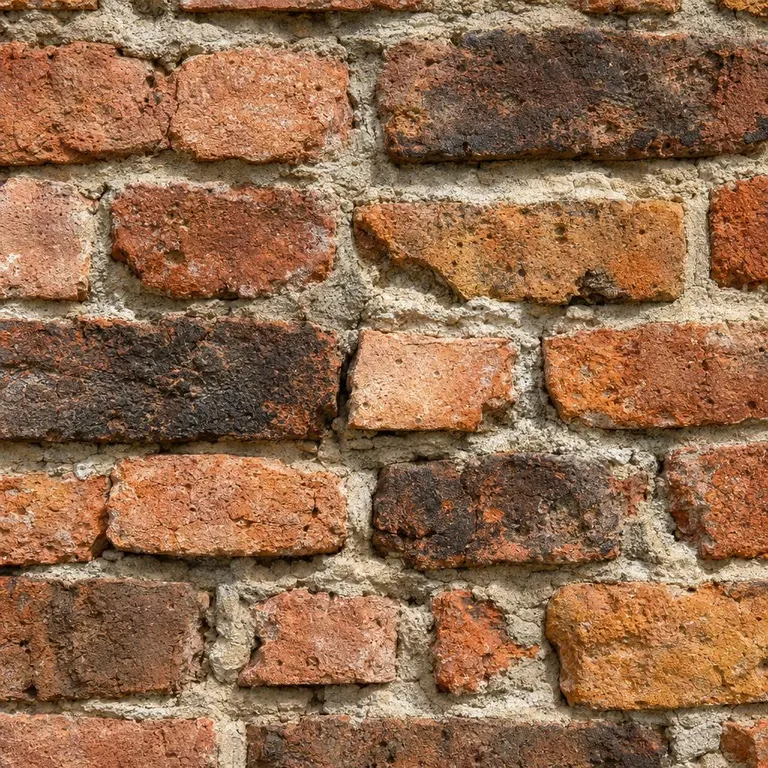
Tumbled adj.
Brick tumbled before it is sold, so edges are soft and surfaces look worn. It looks aged from day one and suits old neighborhoods and garden walls.
Best for: Garden walls, patios, older homesMasonry words, in plain English.
- Bond
- The pattern in which bricks are laid. Running, stack, Flemish, English and herringbone are common.
- Course
- One horizontal row of bricks, stones or blocks.
- Stretcher
- A brick laid with its long side showing on the wall face.
- Header
- A brick laid with its short end showing, tying two layers of a wall together.
- Soldier
- A brick stood on end with its narrow face showing, often used over openings.
- Rowlock
- A brick set on its long edge, common in sills and caps.
- Mortar
- The mix of sand, cement, lime and water that bonds masonry units together.
- Tuckpointing
- Replacing failed mortar joints, traditionally with a thin contrasting line on a matching mortar.
- Repointing
- Removing old mortar to a proper depth and replacing it with new mortar.
- Spalling
- Flaking or popping of a brick or stone face, usually from moisture and freezing.
- Efflorescence
- A white, powdery salt deposit left on masonry as water evaporates.
- Flashing
- Metal or membrane that directs water out of a wall at the base and over openings.
- Weep hole
- A small opening in the mortar that lets water drain out from behind brick.
- Lintel
- A beam of steel or stone that carries the masonry above a door or window.
- Veneer
- A single layer of brick or stone tied to a backing wall, not carrying the building.
- CMU
- Concrete masonry unit, the common concrete block used for structural walls.
- Corbel
- A masonry piece that projects from a wall to carry weight or add decoration.
- Quoin
- A corner stone or brick that is emphasized, often in a contrasting color or size.
- Coping
- The cap on top of a wall or around a pool that sheds water.
- Crown
- The concrete or mortar slab that caps a chimney and sheds water.
- Parging
- A thin coat of mortar applied over a masonry surface, such as a foundation wall.
- Hearth
- The fireproof floor in front of and inside a fireplace.
Try the words on a wall.
Pick a bond, a brick and a mortar in the Bond Pattern Lab and see how each word changes the wall.
Found the word, now the wall?
A free visit and a sample panel turn all this vocabulary into a wall you can see.